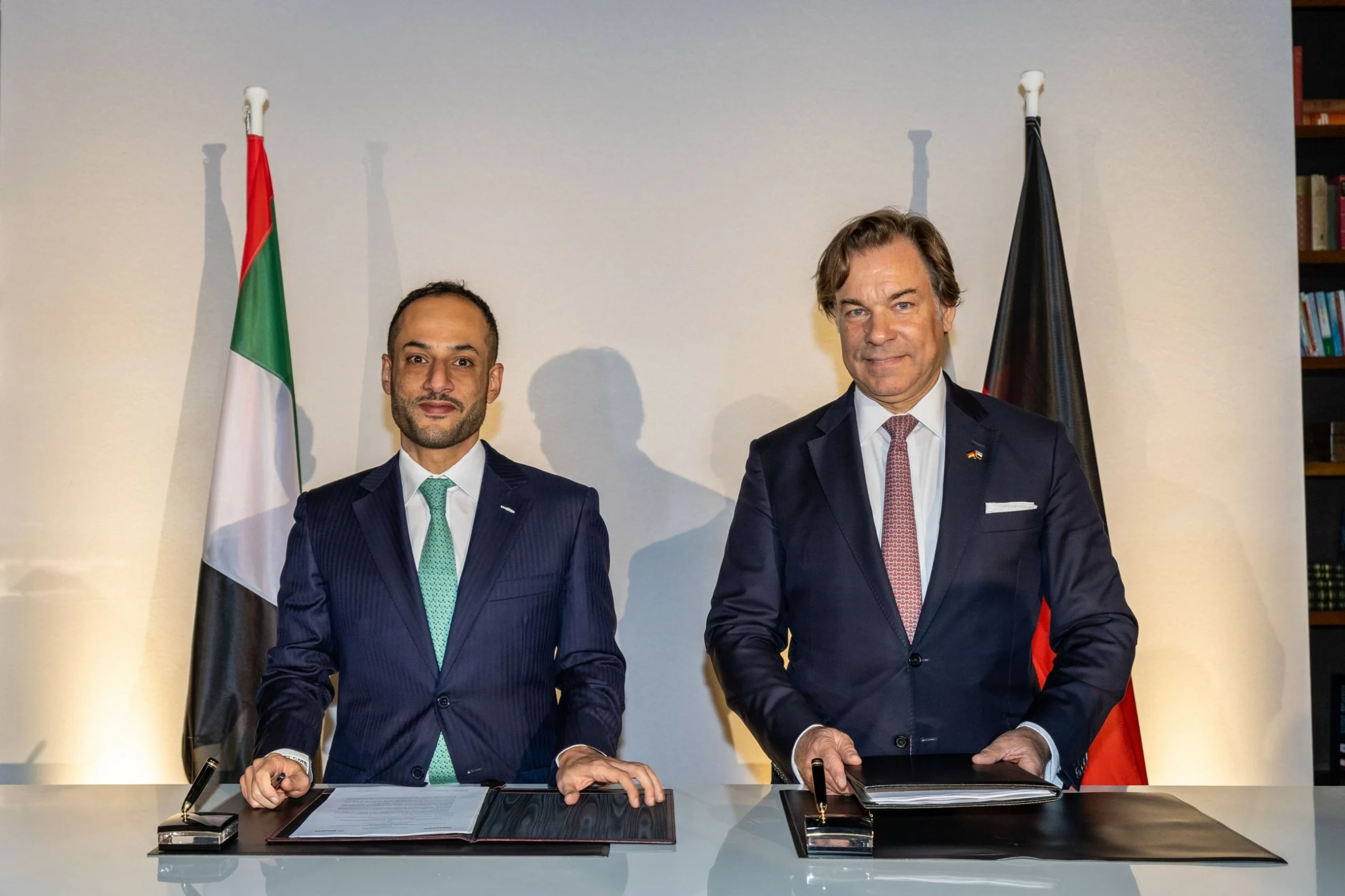


Khazna Data Centres, a global leader in critical AI infrastructure, and Siemens have signed a Memorandum of Understanding aimed at establishing a technical relationship to advance the infrastructure required for the next generation of AI data centres.Signed at the UAE-Germany Business Forum in Munich, the agreement sets out a series of specific areas for potential collaboration. From AI-ready infrastructure strategy and technology testing to next-generation power architectures and engineering talent development, the MoU sets out ambitions to prepare the AI infrastructure ecosystem for rapidly evolving requirements.Sultan Alowais, Vice President – International Execution at Khazna Data Centres, said, “Siemens has made important contributions to the technologies that help data centre operators manage critical infrastructure efficiently and reliably. That becomes even more important as AI drives significantly denser computing environments and places new demands on power and supporting systems,” He added, “Through this MoU, we want to combine that technology expertise with the operational and delivery experience we have built at Khazna, looking practically at what the next generation of AI infrastructure will require and how we can prepare for it.” Through the partnership, Khazna and Siemens will aim to examine emerging technology trends and the implications they could have for the design and operation of future facilities.The collaboration will explore the use of digital twin technology for AI data centres, with the aim of strengthening the ability to model, understand and optimise increasingly complex infrastructure environments.The collaboration will also draw upon Siemens’ digital twin expertise spanning simulation, design validation, system integration, commissioning, and operational optimisation for data centre infrastructure. The companies will continue to progress next-generation 800 VDC power architectures and their potential in AI data centres.Alongside the technology collaboration, the MoU includes a dedicated Emirati talent development initiative. Under the proposed programme, Siemens will sponsor internships in Germany for nominated Emirati engineers, giving participants exposure to next-generation technologies, engineering practices and data centre applications.Khazna and Siemens will additionally explore opportunities to expand their cooperation internationally, assessing Siemens technologies for potential application across Khazna’s rapidly growing international portfolio.Helmut von Struve, Chief Executive Officer of Siemens Middle East and UAE, said, “AI is fundamentally changing the requirements placed on data centre infrastructure. Higher compute densities, rapidly growing power demand and increasing system complexity require new approaches to how facilities are designed, powered, and operated,” He added, “By combining Siemens’ expertise in electrification, automation and digitalisation with Khazna’s experience developing and operating large-scale data centre infrastructure, we can explore and validate technologies in real-world environments. This collaboration is about turning emerging technologies into practical infrastructure solutions that can support the scale, resilience, and efficiency the next generation of AI data centres will demand.” Meanwhile in July 2026 the Higher Colleges of Technology (HCT) has signed a Memorandum of Understanding (MoU) with Siemens to advance sustainability, digital transformation, and applied innovation across the UAE’s higher education landscape.The five-year collaboration supports the UAE’s Net Zero 2050 Strategic Initiative and the UAE Green Agenda 2030 through an integrated programme spanning smart campus transformation, green skills development, and industry-driven research. Under the terms of the MoU, HCT and Siemens will collaborate on innovation, decarbonisation, and digitalisation initiatives designed to advance institutional sustainability and operational performance. The initiative will also accelerate HCT’s data-driven framework, aligning governance, policy, and operational performance to support progress toward its Net Zero ambitions.Mohammed Al Nuaimi, Vice President of Shared Services at HCT, said the partnership would accelerate the transformation of HCT campuses into smarter, more resilient and data-driven environments while reinforcing the institution’s commitment to the UAE’s Net Zero 2050 agenda.Helmut von Struve, CEO of Siemens in the Middle East and UAE, said the collaboration would combine Siemens’ expertise in smart infrastructure, digitalisation and decarbonisation with HCT’s applied learning model to help develop future talent and support the UAE’s transition to a low-carbon, knowledge-based economy.In parallel, a central component of the collaboration will focus on advancing HCT’s campus ecosystem through a Smart Campus Framework, based on Siemens’ Building X platform.WAM
- Homepage
- Breaking News
- World
UAE weather: Week-long summer rain forecast begins today as NCM predicts convective clouds
Afternoon rainfall is expected across eastern, southern and internal...
- Business
UAE allocates $10 million for urgent relief for flood, landslide victims in Nepal
Teams from the UAE Aid Agency are working with...Dubai Municipality launches AI-powered system to issue building permits
New fully automated platform reviews designs, verifies compliance and...Four people stabbed in London’s Covent Garden, woman arrested
Police launch investigation after lunchtime stabbing incident in popular...DP World returns as Strategic Partner of Arab Media Summit for 11th consecutive year
Dubai Press Club renews partnership ahead of largest-ever edition...Qatar declares four days of national mourning for Sheikh Hamad bin Khalifa Al Thani
Government offices to close from July 13, flags to...
- Lifestyle
Uber opens dedicated passenger lounge at Dubai International Airport Terminal 3
New climate-controlled facility offers Uber and Careem users a...AED13.5 billion in loans receive repayment deferrals under UAE support package
More than 135,000 customers benefit from Central Bank measures...
- Travel
UAE schools ban ‘qaza’ haircuts, hoodies, energy drinks and chips for 2026-27 academic year
School administrations have issued circulars warning that prohibited food...Dubai adopts workforce productivity system across government entities
New data-driven platform will help 32 government entities improve...Gold hits three-month high – Emirates 24|7
The precious metal recorded a 5% weekly gain, having...Mohamed Bin Zayed, Putin hold talks on UAE-Russia cooperation and regional developments
UAE and Russian Presidents discuss bilateral cooperation and regional...
- Sports
Dubai real estate transactions reach Dh2.6 billion in one day
The DLD recorded 630 sales transactions worth Dh1.6 billion,...Dubai Humanitarian launches new air bridge to deliver WHO medical aid to Gaza
Four flights carrying medicines, tents and fortified biscuits mark...DP World returns as Strategic Partner of Arab Media Summit for 11th consecutive year
Dubai Press Club renews partnership ahead of largest-ever edition...UAE’s Etihad Rail introduces fines of up to AED 5,000 for passenger misconduct
New passenger charter targets disruptive behaviour, safety violations and...
Renewables 2.0: challenges ahead
At the recent ET Energy Leadership Summit...
UAE urges residents to get flu vaccine ahead of seasonal peak
The Ministry of Health and Prevention has...
Bill Gates is still wrong about climate change
A popular metaphor for climate change is...
- Homepage
- Breaking News
- World
UAE weather: Week-long summer rain forecast begins today as NCM predicts convective clouds
Afternoon rainfall is expected across eastern, southern and internal...
- Business
UAE allocates $10 million for urgent relief for flood, landslide victims in Nepal
Teams from the UAE Aid Agency are working with...Dubai Municipality launches AI-powered system to issue building permits
New fully automated platform reviews designs, verifies compliance and...Four people stabbed in London’s Covent Garden, woman arrested
Police launch investigation after lunchtime stabbing incident in popular...DP World returns as Strategic Partner of Arab Media Summit for 11th consecutive year
Dubai Press Club renews partnership ahead of largest-ever edition...Qatar declares four days of national mourning for Sheikh Hamad bin Khalifa Al Thani
Government offices to close from July 13, flags to...
- Lifestyle
Uber opens dedicated passenger lounge at Dubai International Airport Terminal 3
New climate-controlled facility offers Uber and Careem users a...AED13.5 billion in loans receive repayment deferrals under UAE support package
More than 135,000 customers benefit from Central Bank measures...
- Travel
UAE schools ban ‘qaza’ haircuts, hoodies, energy drinks and chips for 2026-27 academic year
School administrations have issued circulars warning that prohibited food...Dubai adopts workforce productivity system across government entities
New data-driven platform will help 32 government entities improve...Gold hits three-month high – Emirates 24|7
The precious metal recorded a 5% weekly gain, having...Mohamed Bin Zayed, Putin hold talks on UAE-Russia cooperation and regional developments
UAE and Russian Presidents discuss bilateral cooperation and regional...
- Sports
Dubai real estate transactions reach Dh2.6 billion in one day
The DLD recorded 630 sales transactions worth Dh1.6 billion,...Dubai Humanitarian launches new air bridge to deliver WHO medical aid to Gaza
Four flights carrying medicines, tents and fortified biscuits mark...DP World returns as Strategic Partner of Arab Media Summit for 11th consecutive year
Dubai Press Club renews partnership ahead of largest-ever edition...UAE’s Etihad Rail introduces fines of up to AED 5,000 for passenger misconduct
New passenger charter targets disruptive behaviour, safety violations and...